Bitcoin's Unprecedented Resilience Amidst Global Turmoil
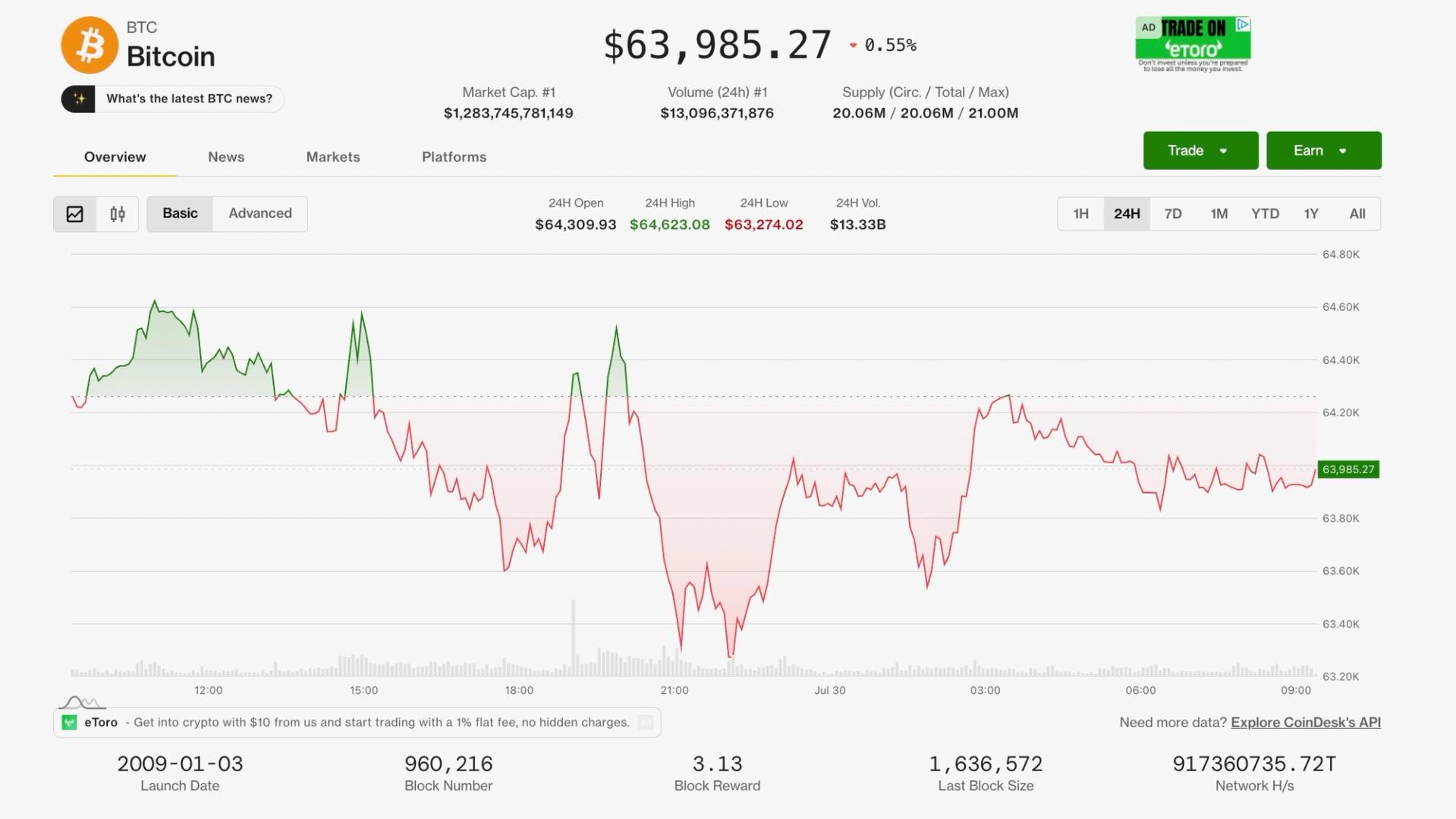
The financial world found itself on edge this week as a potent cocktail of geopolitical aggression and hawkish monetary signals rattled traditional markets. Iran's ballistic missile strikes, an immediate 8% surge in oil prices, and a conspicuously hawkish split within the Federal Reserve sent shockwaves through global equities. The Dow plummeted 2.2%, while the Nasdaq Composite plunged to a three-month low, painting a grim picture for investors. Yet, amidst this storm of uncertainty and fear, one asset stood remarkably firm: Bitcoin. Holding steady near the $64,000 mark, the premier cryptocurrency showcased a level of resilience that demands a closer look, challenging conventional wisdom and potentially signaling a new chapter for digital assets.
The Geopolitical Quake: Iran's Strikes and Oil's Ascent
The immediate catalyst for traditional market jitters was the escalation of Middle East tensions. Iran's missile strikes, a significant geopolitical event, immediately injected a fresh wave of risk aversion into global financial systems. The most visceral response was seen in the commodities market, where crude oil prices surged by a staggering 8% overnight. For traditional economies, a sudden spike in oil is a harbinger of inflationary pressures, increased operational costs for businesses, and a potential slowdown in economic growth. This scenario typically triggers a 'risk-off' sentiment, where investors flee volatile assets in favor of perceived safe havens like the U.S. dollar or government bonds. The dramatic declines in major equity indices like the Dow and Nasdaq were direct consequences of this predictable flight to safety, reflecting deep concerns about global stability and economic prospects.
The Monetary Tightrope: Fed's Hawkish Stance Looms
Adding another layer of complexity and pressure was the Federal Reserve's "hawkish split." While the immediate impact of geopolitical events is often seen as short-term volatility, the Fed's stance on interest rates has profound, lasting implications for all asset classes. A hawkish Fed signals a greater propensity for higher interest rates or a longer period of elevated rates, driven by persistent inflationary concerns. Higher rates increase borrowing costs, make capital more expensive, and typically reduce the appeal of risk assets like stocks, particularly growth-oriented technology stocks that often rely on future earnings potential. The Nasdaq's drop to a three-month low underscored the market's sensitivity to this monetary tightening, as investors priced in a less favorable environment for corporate profitability and economic expansion. For many, this combination of geopolitical instability and monetary tightening presented a formidable bearish outlook.
Bitcoin's Unshakeable Resolve: A New Narrative Emerges?
Against this backdrop of converging crises, Bitcoin's steadfastness near $64,000 was nothing short of remarkable. Unlike its equity counterparts, which buckled under pressure, Bitcoin seemed to shrug off the dual threats. This performance begs the question: what factors contributed to this unprecedented resilience? A primary argument gaining traction is Bitcoin's evolving role as a "digital gold" or an alternative safe-haven asset. In times of geopolitical uncertainty and currency debasement fears, investors have historically turned to physical gold. Bitcoin, with its decentralized nature, finite supply, and censorship resistance, presents a compelling digital alternative. Its ability to maintain value when traditional financial systems are under stress strengthens this narrative, suggesting a growing conviction among investors that Bitcoin is a hedge against systemic risk, rather than merely a speculative tech play.
Furthermore, the maturation of the cryptocurrency market itself plays a crucial role. Institutional adoption, particularly through spot Bitcoin ETFs, has brought a new class of sophisticated investors into the fold. These institutions tend to have longer investment horizons and a more robust understanding of market dynamics, contributing to greater price stability and reduced knee-jerk reactions to news. The market is less dominated by retail speculation and more by fundamental analysis and long-term conviction. Moreover, the underlying demand for Bitcoin appears robust, supported by a global network of users who see its intrinsic value beyond mere price fluctuations. This fundamental demand, coupled with its disinflationary monetary policy (especially with the recent halving event), provides a strong floor against severe downturns, even when external shocks occur.
Decoupling or Defiance?
The stark divergence between Bitcoin's stability and traditional markets' instability raises critical questions about decoupling. While Bitcoin has historically shown some correlation with tech stocks, particularly during risk-on/risk-off cycles, this recent episode suggests a potential shift. It implies that a significant segment of the market now views Bitcoin through a different lens—one that prioritizes its unique characteristics as an independent, decentralized asset, rather than solely as a high-beta tech proxy. This isn't to say Bitcoin is entirely immune to global events, but it suggests a growing capacity to weather storms that would typically engulf risk assets.
Looking Ahead: Stress Test Passed, But Challenges Remain
Bitcoin's performance this week serves as a powerful stress test, which it appears to have passed with flying colors. It has demonstrated an impressive ability to absorb significant macroeconomic and geopolitical shocks without capitulating. This resilience could further solidify its position in diversified investment portfolios, attracting capital from investors seeking genuine diversification and an alternative store of value.
However, challenges persist. Escalation of geopolitical conflicts, a more aggressive and sustained tightening by the Fed, or unforeseen regulatory crackdowns could still pose significant headwinds. Yet, the underlying narrative of Bitcoin as a hedge against inflation and systemic risk has been significantly strengthened by its recent steadfastness. For crypto analysts and investors alike, this period offers invaluable data, suggesting that Bitcoin is evolving beyond its nascent, volatile reputation into a more mature, robust asset class capable of holding its own—and even thriving—in an increasingly unpredictable global landscape. The market may have just witnessed a pivotal moment in Bitcoin's journey towards mainstream acceptance as a truly independent and resilient financial asset.