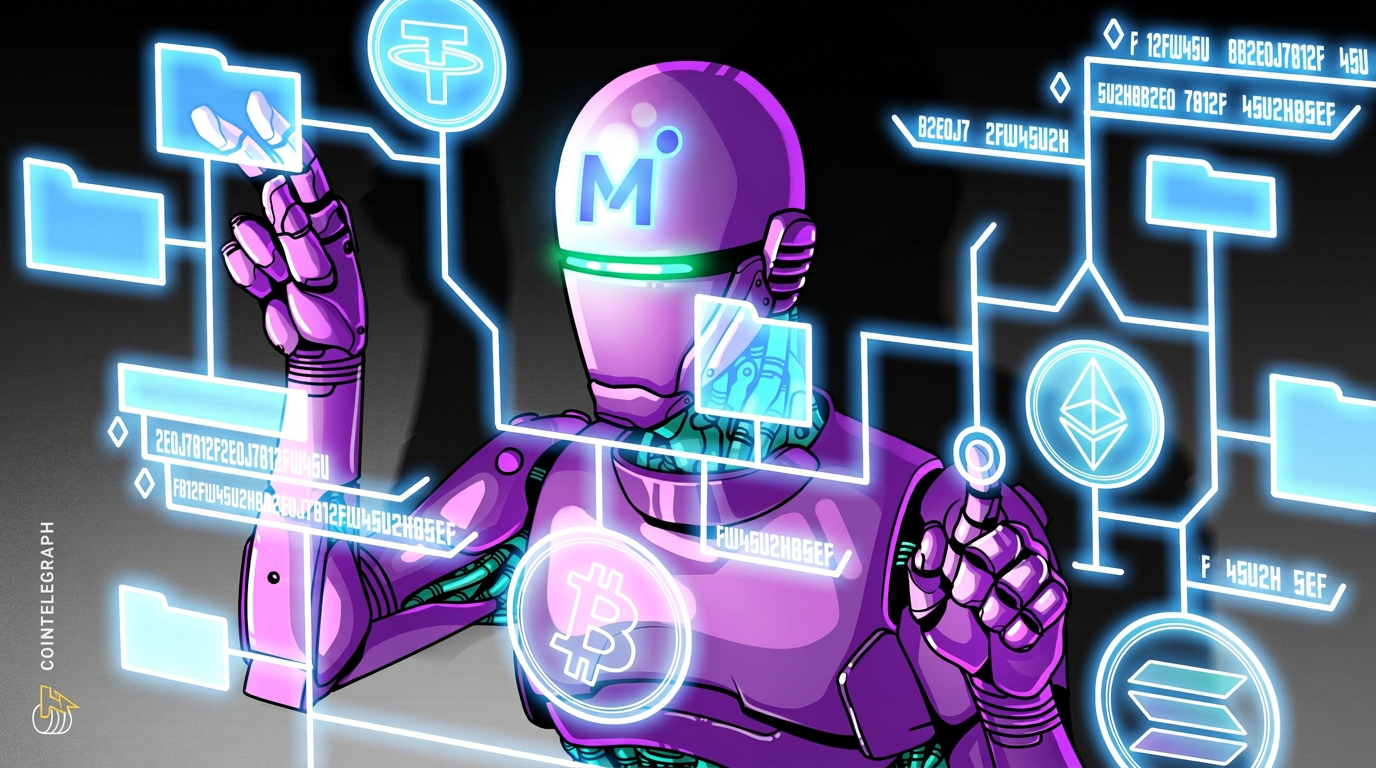
The Convergence of AI and Web3: A New Era for Crypto Accessibility
The lines between artificial intelligence and decentralized finance are blurring at an accelerating pace. In a landmark development, MoonPay, a leading crypto payments infrastructure provider, has unveiled its PayBox vault, a revolutionary tool poised to transform how users interact with cryptocurrencies. By integrating PayBox with popular large language models (LLMs) like ChatGPT and Claude, MoonPay is enabling a seamless, natural language-driven gateway for crypto transactions, all while upholding the fundamental Web3 principle of self-custody. As a Senior Crypto Analyst, I view this as a pivotal moment, signaling a significant leap forward in user experience, mainstream adoption, and the overall functionality of the decentralized web.
Understanding MoonPay's PayBox Vault: Bridging Simplicity and Security
At its core, MoonPay's PayBox vault is designed to simplify complex crypto operations that typically deter new users. Imagine expressing a desire to purchase Bitcoin, swap ETH for a specific altcoin, or transfer tokens across different blockchains, and having that command executed through a conversational AI interface. This is precisely what PayBox promises. Users of ChatGPT and Claude can now authorize a range of crypto activities directly through their AI assistants.
Crucially, the 'vault' aspect of PayBox highlights its security and self-custodial nature. Unlike traditional centralized exchanges where users relinquish control of their assets, PayBox allows individuals to authorize transactions while retaining full custody of their private keys and digital funds. This distinction is paramount in the crypto space, aligning with the ethos of decentralization and user sovereignty. It effectively marries the convenience of AI-powered interaction with the security and control inherent in self-custody, offering a powerful hybrid solution.
The Revolution in User Experience: Lowering the Barrier to Entry
The immediate and most palpable impact of PayBox's integration lies in its potential to dramatically enhance the user experience for cryptocurrency interactions. For years, the crypto world has grappled with a steep learning curve, characterized by intimidating interfaces, complex wallet management, and technical jargon. PayBox, through its AI interface, promises to abstract away much of this complexity. Natural language processing allows users to articulate their financial intentions in plain English, transforming multi-step processes into simple conversational commands.
This paradigm shift has profound implications for mass adoption. By making crypto as accessible as asking a question to an AI assistant, MoonPay is opening the floodgates for individuals who may have previously found Web3 daunting. It's a significant step towards democratizing access to digital assets and decentralized finance, potentially onboarding millions of new users who value convenience without sacrificing control.
Self-Custody Meets AI: A Balancing Act of Trust and Control
The commitment to retaining self-custody while facilitating AI-driven transactions is a bold move that addresses a critical tension in the crypto space: the trade-off between convenience and control. Many earlier attempts at simplifying crypto involved centralized custodians, which, while user-friendly, undermine the core principle of decentralization. PayBox demonstrates that it's possible to achieve both.
However, the security implications for a Senior Crypto Analyst are always top of mind. While the user retains custody, the authorization mechanism via an AI raises new questions. How does the system prevent unauthorized transactions if an AI is compromised or 'hallucinates' a command? Robust security protocols, including multi-factor authentication and explicit human confirmation for every transaction initiated via AI, will be absolutely vital. Users must be educated on how to verify transaction details independently of the AI's presentation to mitigate risks like prompt injection or sophisticated phishing attempts that might leverage the AI interface.
Broader Market Implications and Future Outlook
This integration marks a critical inflection point for both the AI and Web3 industries. For Web3, it showcases the power of composability, where sophisticated AI models become intuitive front-ends for complex blockchain operations. We could see a surge in DeFi engagement, as everyday users find it easier to participate in staking, liquidity provision, and other advanced financial activities currently reserved for more tech-savvy individuals. This could also spur innovation in AI-native financial products and services.
From an AI perspective, it expands the utility of LLMs beyond information retrieval and content generation into direct financial action, pushing the boundaries of what these models can achieve. The competitive landscape for crypto payment rails and onboarding solutions will undoubtedly intensify, with a focus on integrating similar AI capabilities. Looking ahead, this could pave the way for AI agents that manage portfolios, execute complex trading strategies, or even interact with entire decentralized autonomous organizations (DAOs) on behalf of users, all under self-custodial principles.
Challenges remain, including the need for clear regulatory frameworks governing AI in finance, robust auditing of the integration layer, and continuous user education on responsible AI interaction. However, the potential for seamless, intelligent, and secure financial interactions is too significant to ignore.
Conclusion: A New Chapter in Crypto's Evolution
MoonPay's PayBox vault, through its integration with ChatGPT and Claude, is not merely an incremental update; it represents a paradigm shift in how we envision and interact with cryptocurrencies. By harmonizing the intuitive power of AI with the foundational security and control of self-custody, PayBox is dismantling barriers to entry and charting a course for unprecedented mainstream adoption. This is a powerful step towards a future where digital assets are not just for the technically proficient, but an accessible reality for everyone, securely managed through the most natural interface of all: conversation.